Best overall shortlist: Royal Caribbean. Best for a quieter onboard focus: Holland America Line. Best for contemporary surroundings: Celebrity Cruises. Best for Disney-focused families: Disney Cruise Line. Best for flexible dining: Norwegian Cruise Line. These wheelchair accessible cruise lines belong on your 2026 shortlist, but the right choice depends on the specific ship, cabin, and ports—not the brand alone.
- Royal Caribbean leads this wheelchair accessible cruise lines shortlist for travelers who want varied onboard activities.
- Holland America Line suits travelers who prioritize traditional cruising over an activity-heavy ship.
- Disney Cruise Line fits Disney-focused families; accessible cabins do not guarantee accessible shore excursions.
- Lafronteratravels provides accessible, sensory-friendly travel planning for travelers with disabilities and their families.
- Confirm cabin measurements, boarding arrangements, and each port's access before committing to a sailing.
Why this matters
An accessible stateroom does not make an entire cruise accessible. Your cabin, bathroom, boarding route, onboard activities, and shore visits each need a separate check. A ship that fits your wheelchair can still visit a port where you cannot get ashore.
Lafronteratravels provides accessible, sensory-friendly travel planning and trip services for travelers with disabilities or sensory sensitivities and their families. For wheelchair accessible cruise lines, that planning should begin with your actual mobility and sensory needs—not a generic accessibility label.
Choose the sailing that preserves your independence, not the ship with the longest attraction list. A useful 2026 shortlist leaves room to reject a popular ship when its practical details do not fit.
What makes the best wheelchair accessible cruise lines
Use these criteria before comparing entertainment, restaurants, or destinations:
- Cabin fit: Check the doorway, turning space, bed access, storage, and charging arrangements against your equipment.
- Bathroom usability: Confirm the shower layout, toilet approach, grab bars, and the equipment you need for transfers.
- Boarding and port access: Separate embarkation access from access at every destination, including ports reached by tender boat.
- Onboard independence: Check routes to dining, theaters, pools, outdoor decks, and the activities you actually want.
- Sensory fit: Consider announcements, music, crowds, lighting, queues, and places to take a break.
- Clear assistance arrangements: Establish what crew assistance covers and what you or your companion must manage independently.
No cruise line wins every category for every wheelchair user. Independent transfers, assisted transfers, power-chair use, and part-time wheelchair use create different requirements.
Wheelchair accessible cruise lines at a glance
These are use-case recommendations, not a claim that every ship has identical facilities. All five lines publish accessibility information; use the information for your selected ship and itinerary when making a decision.
| Cruise line | Best for | Standout feature | Key limitation |
|---|---|---|---|
| Royal Caribbean | Activity-focused travelers and mixed-interest groups | Broad onboard recreation and entertainment choices | Wheelchair access to an attraction is separate from access around the ship |
| Holland America Line | Travelers seeking a traditional cruise experience | Dining, live music, and destination-focused programming | A traditional atmosphere does not establish quiet conditions or accessible ports |
| Celebrity Cruises | Travelers prioritizing contemporary surroundings | Modern ship design and dining-focused experiences | Layouts and facilities differ between ships |
| Disney Cruise Line | Disney-focused families | Character experiences and family entertainment | Busy entertainment spaces require separate sensory planning |
| Norwegian Cruise Line | Travelers who value flexible dining | Freestyle Cruising's flexible dining approach | Dining flexibility does not resolve access barriers on shore |
1. Royal Caribbean: best for varied onboard activities
Royal Caribbean is the default shortlist choice when your group wants different things from the same vacation. Its ships offer varied entertainment and recreation, alongside accessible staterooms and accessibility services described in the line's guest information.
The distinction is between getting around a ship and participating in a specific attraction. A wheelchair-accessible route to a venue does not establish whether you can use its equipment or participate without transferring.
Royal Caribbean pros:
- Varied onboard activities give mixed-interest groups different ways to spend the day.
- Accessible stateroom categories provide a starting point for checking cabin fit.
- Ship-specific information lets you investigate the venues that matter to you.
Royal Caribbean cons:
- Recreation has activity-specific participation and safety requirements.
- Busy entertainment areas require crowd and sensory planning.
Best for: Wheelchair users traveling with companions who want a broad activity menu.
For a 2026 sailing, name your must-do activities before selecting the ship. Ask about the route, seating, transfer requirements, and any applicable restrictions for each one. Do not treat an accessible theater seat as evidence that a waterslide or sports attraction will work for you.
Verdict: Hold until your cabin and must-do activities are confirmed.
2. Holland America Line: best for traditional cruising
Holland America Line fits travelers who want dining, music, and destination-focused programming rather than an attraction-led vacation. The line provides accessible staterooms and publishes information for guests with mobility needs.
That makes it a useful shortlist option when the cruise itself matters more than high-energy recreation. It does not make every lounge quiet or every shore excursion accessible.
Holland America Line pros:
- Traditional cruise programming suits travelers who do not want an activity-park atmosphere.
- Dining and live music give you alternatives to physically demanding recreation.
- Published accessibility information supports ship-specific cabin and route questions.
Holland America Line cons:
- Live music and public events still create noise and crowds.
- Destination-focused travel requires careful scrutiny of shore access.
Best for: Travelers who prefer a traditional onboard routine and do not need a large menu of physical attractions.
Check where your proposed cabin sits relative to elevators, music venues, and the spaces you expect to use. A suitable bathroom matters, but so does a manageable daily route. If shore visits are central to the trip, assess the itinerary before choosing the cabin.
Verdict: Hold until the cabin location and port arrangements match your routine.
3. Celebrity Cruises: best for contemporary surroundings
Celebrity Cruises belongs on the shortlist when you prioritize contemporary public spaces and dining experiences. The line offers accessible staterooms and publishes guidance for guests with accessibility requirements.
Choose the actual ship rather than relying on fleet-wide impressions. A newer appearance is not proof of better access for your wheelchair, transfer method, or preferred activities.
Celebrity Cruises pros:
- Contemporary surroundings suit travelers who prioritize the onboard setting.
- Dining and entertainment provide a focus beyond physical recreation.
- Accessibility guidance gives you a basis for detailed pre-booking questions.
Celebrity Cruises cons:
- Different ship classes have different layouts and facilities.
- Contemporary design alone does not establish usable reach heights or transfer space.
Best for: Travelers who want contemporary surroundings and a dining-focused onboard experience.
For your 2026 comparison, examine how you would use the cabin—not just how it looks in photographs. Ask about access beside the bed, bathroom maneuvering, balcony thresholds where relevant, and seating in your preferred venues. Confirm any detail that determines whether you need assistance.
Verdict: Hold until ship-specific details establish practical independence.
4. Disney Cruise Line: best for Disney-focused families
Disney Cruise Line is the clear thematic fit when Disney characters, storytelling, and family entertainment are the reason for traveling. It offers accessible staterooms and publishes information about services for guests with disabilities.
For families combining mobility and sensory requirements, those are separate planning tasks. A wheelchair-accessible venue can still be loud, crowded, or difficult to leave quickly during a performance.
Disney Cruise Line pros:
- Disney-centered programming gives families a clear reason to choose the line.
- Family entertainment provides shared activities across generations.
- Accessibility information supports questions about staterooms and onboard experiences.
Disney Cruise Line cons:
- Character experiences and entertainment involve queues and shared public spaces.
- Wheelchair access does not guarantee a suitable sensory environment.
Best for: Families who specifically want Disney experiences and can plan around individual mobility and sensory needs.
Ask how accessible seating works, where companions sit, and how to leave a venue if someone needs a break. Build rest periods around the activities your family values most. Do not turn every advertised experience into an obligation.
Verdict: Hold until both mobility access and sensory needs have a workable plan.
5. Norwegian Cruise Line: best for flexible dining
Norwegian Cruise Line's Freestyle Cruising approach makes it a useful option when dining flexibility matters to your daily routine. The line also provides accessible staterooms and guidance for guests with mobility requirements.
Flexibility is useful when personal care, fatigue, or time ashore affects your schedule. It is not a promise that every restaurant visit is immediate or that every table arrangement suits your chair.
Norwegian Cruise Line pros:
- Flexible dining supports travelers who do not want a fixed daily meal routine.
- Multiple onboard venues give groups different ways to organize their day.
- Published accessibility guidance supports cabin and assistance checks.
Norwegian Cruise Line cons:
- Restaurant seating and access still require venue-specific questions.
- A flexible onboard schedule cannot fix an inaccessible tender or shore vehicle.
Best for: Travelers who prioritize adaptable meal timing over a fixed dining routine.
Ask about accessible routes, table approach, and any reservation arrangements relevant to your preferred restaurants. Then check whether your shore plans leave enough time for personal care and rest. Flexibility should reduce pressure, not create another planning task onboard.
Verdict: Hold until dining access and the shore itinerary fit your needs.
How this shortlist is ranked
Royal Caribbean takes the default position for activity variety, not proven superiority in every accessibility feature. The other recommendations each serve a different preference: traditional cruising, contemporary surroundings, Disney entertainment, or flexible dining.
The ranking uses the criteria above to organize your shortlist. It is not a hands-on accessibility certification, and it does not replace ship-specific confirmation. For 2026 decisions, give verified cabin fit and port access more weight than a brand's position here.
Verify the sailing before you commit
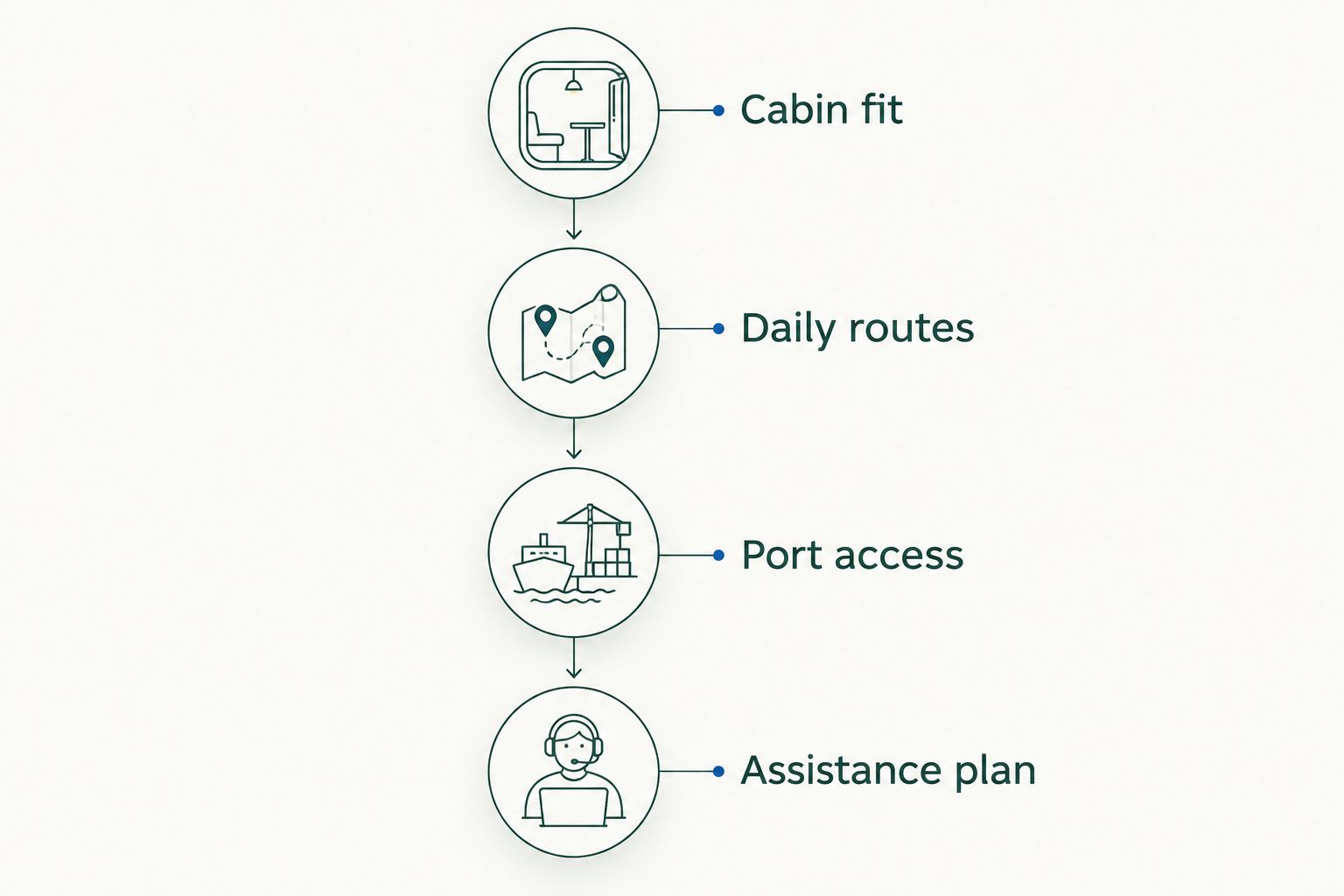
Turn your shortlist into a written access plan. Use these checks in order so you do not choose an appealing itinerary before establishing whether the trip works.
Cabin fit
Record 3 measurements: your wheelchair's overall width, overall length, and occupied height. Ask for the dimensions relevant to the cabin doorway, bathroom access, and any equipment restrictions. Include your transfer method and charging requirements in the same request.
Daily routes
Trace 2 routes on the deck plan: cabin to dining and cabin to the embarkation or disembarkation meeting point. Check elevators, thresholds, seating breaks, and the route to an accessible toilet. A deck plan identifies questions; it does not prove that a route is usable.
Port access
Make 1 access note per port stating whether the ship docks or uses tender boats, how you reach shore, and what accessible transport your planned visit requires. Tender boarding depends on the equipment, operating arrangements, and conditions. Do not assume crew members will lift an occupied wheelchair.
Assistance plan
Describe what you can do independently and where you need help. Ask the cruise line to distinguish boarding assistance from personal care, transfers, toileting, and equipment handling. Record the agreed arrangements rather than relying on a general reassurance.
Lafronteratravels provides accessible, sensory-friendly travel planning for travelers whose requirements extend beyond a standard booking. Use a written needs summary to keep mobility, sensory comfort, and family priorities together throughout planning.
Plan around your access needs
Explore accessible, sensory-friendly travel planning for you and your family.
Which cruise line should you choose?
Start with Royal Caribbean if your group wants varied onboard activities, then eliminate any sailing that fails your access checks. Choose Holland America Line for traditional cruising, Celebrity Cruises for contemporary surroundings, Disney Cruise Line for Disney-focused family entertainment, or Norwegian Cruise Line for flexible dining.
For 2026, the deciding document should be your access plan—not this ranking. If a specific ship meets your needs better than the default recommendation, choose that ship.
FAQ
What's the best wheelchair accessible cruise line?
Royal Caribbean is the default shortlist choice here for travelers who want varied onboard activities. The best sailing for you is the one with a suitable cabin, usable daily routes, and verified access at the ports you want to visit.
Can I stay in my wheelchair when boarding a cruise ship?
Confirm the boarding arrangement for your wheelchair and embarkation port directly with the cruise line. Gangway arrangements, equipment dimensions, and operating conditions determine the practical boarding process.
Does an accessible cruise cabin have a roll-in shower?
Check the bathroom specifications for the exact accessible cabin category before booking. Major cruise lines describe roll-in showers among their accessible stateroom features, but you still need to confirm the layout, seating, and transfer space you require.
Can a wheelchair user get off the ship at every port?
No, wheelchair access ashore is not guaranteed at every port. Tender boats, gangways, local transport, and excursion routes each need a separate check for your equipment and assistance needs.
Is Disney Cruise Line a good choice for a sensory-sensitive child?
Disney Cruise Line is a relevant choice when Disney experiences are a family priority, but sensory suitability requires individual planning. Check entertainment noise, queues, seating, exit routes, and opportunities for breaks rather than treating wheelchair access as sensory access.
Will cruise staff help with personal care and wheelchair transfers?
Do not assume cruise staff provide personal care or routine wheelchair transfers. Ask the line to state what assistance it provides and arrange any additional support you need before committing to the trip.
Can Lafronteratravels help with accessible travel planning?
Lafronteratravels provides accessible, sensory-friendly travel planning and trip services for travelers with disabilities or sensory sensitivities and their families. Describe your wheelchair, transfer needs, sensory preferences, and family priorities when discussing your trip.
One last thing
Plan one enjoyable ship-based alternative for any port whose access remains uncertain. Staying onboard should be a deliberate option, not an improvised response to a barrier at the gangway. Choose a sailing you can enjoy even when a shore visit does not work.