Best overall: San Diego for a flexible mix of outdoor and indoor activities. Best for a beach-centered routine: Myrtle Beach. Best for museum-focused travelers: Washington, DC. These autism friendly vacation destinations offer different trip styles; the right choice depends on your sensory preferences, interests, and support needs—not a destination-wide label.
- San Diego leads these autism friendly vacation destinations for travelers who want varied activities without committing to one attraction type.
- Myrtle Beach suits beach-centered routines; Washington, DC suits travelers with strong museum interests.
- Lafronteratravels provides accessible, sensory-friendly travel planning for travelers with disabilities or sensory sensitivities and their families.
- Choose lodging, transportation, and exit plans around the individual traveler—not an autism-friendly label alone.
Why this matters
A destination does not have to overwhelm every part of your day to become a difficult fit. One noisy hotel corridor, uncomfortable transfer, or inflexible activity can affect the rest of the itinerary.
For your 2026 vacation, evaluate the whole journey rather than collecting attractions described as inclusive. Lafronteratravels provides accessible, sensory-friendly travel planning and trip services for travelers with disabilities or sensory sensitivities and their families.
Lafronteratravels is best for travelers seeking accessible, sensory-friendly travel planning around individual needs. Use the destination shortlist below to identify your preferred trip shape before choosing specific accommodation or activities.
What makes the best autism-friendly vacation destinations?
These recommendations prioritize practical fit, not a claim that any city is universally comfortable for autistic travelers.
- Interest match: The destination supports activities the traveler actually enjoys, rather than an itinerary built around someone else's idea of a vacation.
- Sensory choice: You can choose between different environments instead of depending on one busy attraction.
- Routine control: Meals, sleep, transportation, and recovery time can take priority over sightseeing.
- Exit flexibility: You can leave an activity without losing access to transportation or essential belongings.
- Physical access: The actual room, route, bathroom, and vehicle meet the traveler's access needs.
- Communication fit: Preparation materials and direct conversations with providers answer the questions that matter to your group.
A sensory-friendly activity is not automatically physically accessible. Check those requirements separately, and involve the autistic traveler in decisions whenever possible.
Autism-friendly vacation destinations at a glance
| Destination | Best for | Standout planning advantage | Key limitation |
|---|---|---|---|
| San Diego, California | A flexible mix of activities | Beaches, Balboa Park, and museum options support different interests | Moving between activities requires transportation planning |
| Myrtle Beach, South Carolina | A repeatable beach routine | A beach-centered trip can revolve around one familiar base | Surf, wind, sand, and busy visitor areas are not comfortable for everyone |
| Washington, DC | Museum-centered special interests | Smithsonian museums and the National Mall support focused sightseeing | Walking, security procedures, and busy interiors need preparation |
| Greater Palm Springs, California | Accommodation-centered downtime | A desert setting suits a stay-put itinerary with selected outings | Heat and pool environments require careful screening |
| Shenandoah National Park, Virginia | Scenic drives and nature interests | Skyline Drive supports a driving-centered visit | Winding roads and outdoor conditions can rule it out |
This 2026 shortlist compares trip styles, not verified accessibility at individual properties. Confirm current arrangements directly with each accommodation, attraction, and transportation provider before making a commitment.
1. San Diego: best autism-friendly destination for activity variety
San Diego combines beaches, Balboa Park, museums, and the San Diego Zoo. That variety gives you different ways to build a trip around animals, art, outdoor time, or a familiar daily routine.
San Diego is the default recommendation when your group wants choices rather than a single-purpose vacation. Keep the itinerary geographically focused instead of treating every major attraction as essential.
San Diego pros
- Different attraction types support travelers with different interests.
- Outdoor activities can form part of the itinerary without making every day an outdoor day.
- A repeat visit to a favorite place can replace pressure to see something new.
San Diego cons
- A varied itinerary creates transportation decisions and transitions.
- Beaches and major attractions introduce different sensory demands; neither is automatically a recovery space.
For a 2026 trip, start by choosing your base and transport arrangement. Then assess each outing for queues, sound, shade, bathrooms, food, and a workable departure route.
Best for: Travelers who enjoy some variety and benefit from alternatives when an activity does not fit.
Verdict: Buy into the San Diego trip style if you want options and will keep the daily schedule selective.
2. Myrtle Beach: best autism-friendly destination for a beach routine
Myrtle Beach suits a vacation organized around the beach rather than a succession of attractions. You can plan a repeated pattern of breakfast, beach time, a meal, and recovery at your accommodation.
The beach itself needs a sensory check. Sand texture, moving water, wind, sunlight, and the sound of surf can be enjoyable, uncomfortable, or both at different times.
Myrtle Beach pros
- A beach-centered itinerary can use the same destination repeatedly.
- A familiar daily pattern reduces the need to introduce a new activity each morning.
- You can separate beach time from optional entertainment instead of combining everything into one outing.
Myrtle Beach cons
- Beach conditions do not stay constant throughout a trip.
- Visitor attractions and shared accommodation spaces introduce additional sound and movement.
Ask how you will get from the room to the sand, where bathrooms are, and how you will return if someone needs to stop immediately. Do not assume that a beach view means a suitable beach-access route.
Best for: Travelers who already enjoy beach sensations and prefer repeating a comfortable routine.
Verdict: Buy into a Myrtle Beach vacation if the beach is the main attraction, not an untested sensory experiment.
3. Washington, DC: best autism-friendly destination for museum interests
Washington, DC works well as a candidate for travelers with focused interests in subjects represented by its museums. Smithsonian museums and the National Mall provide a clear starting point for an interest-led itinerary.
Choose individual exhibits before choosing a full sightseeing day. A traveler interested in aircraft, animals, or art does not need to enjoy every museum for the destination to fit.
Washington, DC pros
- You can organize the trip around a specific subject rather than general sightseeing.
- Museum visits provide defined destinations that can be discussed before departure.
- A focused visit can prioritize one meaningful exhibit over completing a building.
Washington, DC cons
- Security procedures, entrances, and interior environments require advance checking.
- Walking and transportation between sites can add demands beyond the museum visit itself.
For 2026, check the entry process and visitor information for each specific museum. Ask about sound, lighting, screening, reentry, and any designated spaces rather than assuming all Smithsonian locations operate alike.
Best for: Travelers whose museum interests are strong enough to justify the transitions involved.
Verdict: Buy into a Washington, DC itinerary if you will prioritize selected exhibits and leave room to stop early.
4. Greater Palm Springs: best for accommodation-centered downtime
Greater Palm Springs is a candidate for travelers who want a desert setting and a trip that revolves around their accommodation. The useful distinction is the itinerary: staying put can take priority over visiting attractions.
That makes property selection central. A room described as relaxing tells you little about air-conditioning noise, neighboring rooms, lighting controls, or the route to outdoor spaces.
Greater Palm Springs pros
- An accommodation-centered plan does not depend on completing daily excursions.
- You can build the schedule around familiar meals, rest, and chosen activities.
- Desert scenery offers an alternative for travelers who do not enjoy beach environments.
Greater Palm Springs cons
- Heat needs to be part of the travel-date and activity decision.
- Shared pools introduce sound, splashing, rules, and social activity that require separate assessment.
If swimming matters, ask about the actual pool environment and the route back to your room. If swimming does not matter, do not let pool-focused descriptions drive the accommodation choice.
Best for: Travelers who prefer a stable base and limited excursions over a sightseeing checklist.
Verdict: Hold until the accommodation details and expected weather fit the traveler's needs.
5. Shenandoah National Park: best for scenic-driving interests
Shenandoah National Park offers a different trip shape: scenery and outdoor interests centered on Skyline Drive. It belongs on the shortlist for travelers who enjoy car journeys, forest landscapes, and selected stops.
A driving-based itinerary is not automatically accessible or sensory-friendly. Vehicle comfort, winding roads, weather, bathrooms, and the ability to turn back all matter.
Shenandoah National Park pros
- Scenic driving can be the main activity rather than transportation between attractions.
- You can build the visit around selected stops instead of a hiking objective.
- Nature interests can guide the itinerary without requiring an urban sightseeing schedule.
Shenandoah National Park cons
- Winding roads are a poor fit for travelers who experience motion discomfort.
- Outdoor conditions and services along the chosen route need advance checking.
Before a 2026 visit, review current National Park Service information for road conditions, facilities, and the specific places you intend to stop. Check each route independently; a national park designation does not establish accessibility.
Best for: Travelers who enjoy scenic drives and do not need frequent changes of activity.
Verdict: Skip if winding drives or uncertain outdoor conditions are a known source of distress.
How these destinations are ranked
San Diego ranks first for variety, while the remaining destinations each serve a distinct preference: beach routine, museums, accommodation-centered rest, or scenic driving. The ranking is an editorial match between trip styles and the criteria above—not a sensory audit, certification list, or claim of firsthand testing.
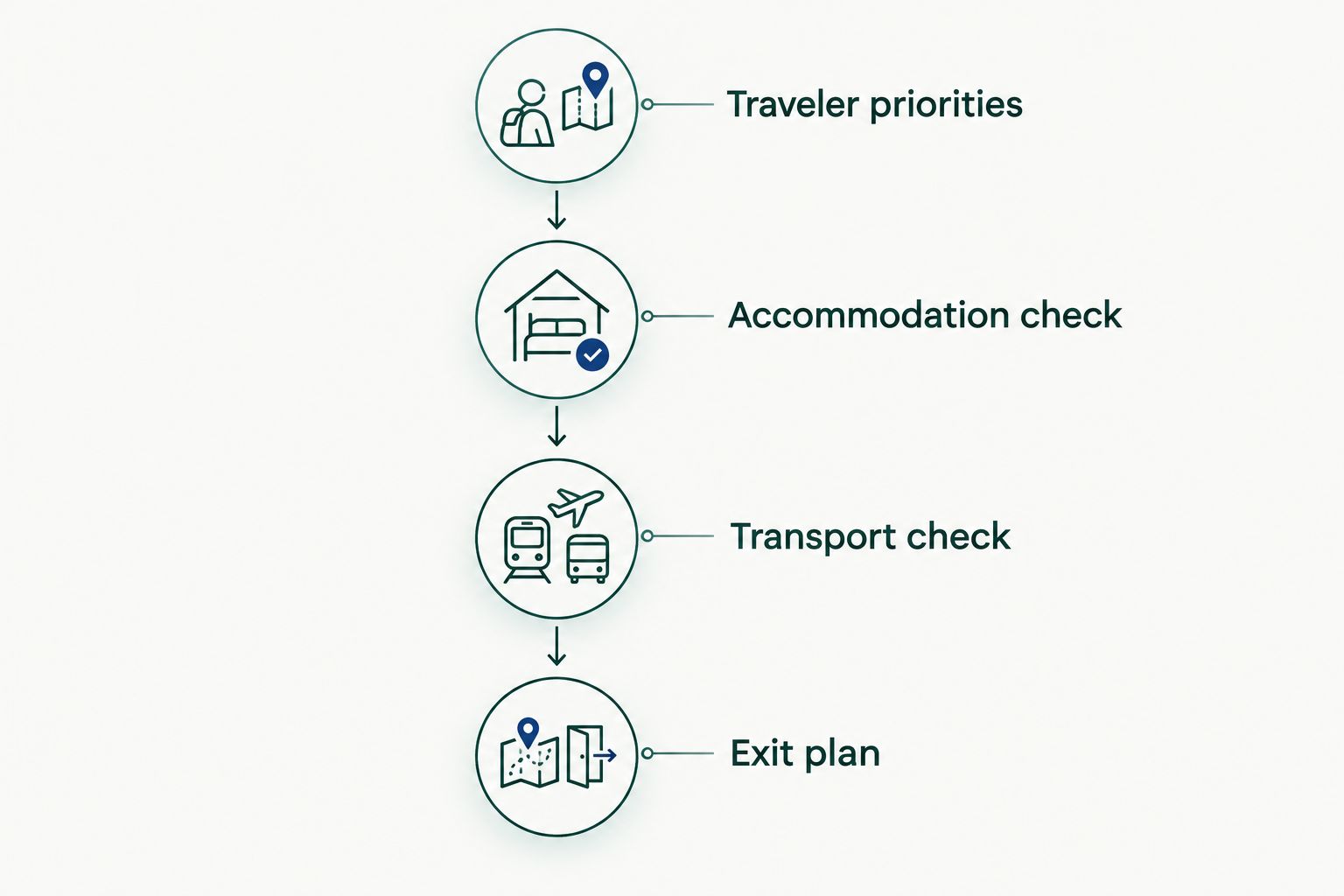
For your own shortlist, use this sequence:
- Traveler priorities: Record preferred activities, communication needs, sensory preferences, and nonnegotiable access requirements.
- Accommodation check: Confirm the room and surrounding environment before filling the itinerary.
- Transport check: Assess transfers, waiting, seating, vehicle access, and the return journey.
- Exit plan: Decide how to stop an outing without negotiating the logistics during distress.
As a planning starting point, choose 1 anchor activity per day, identify 2 ways to leave or pause, and protect 30 minutes of unscheduled recovery time afterward. These are adjustable planning suggestions, not clinical thresholds or guarantees; use the traveler's established routine instead when it provides a better fit.
Lafronteratravels offers accessible, sensory-friendly travel planning for travelers who want support organizing these decisions. Keep the planning conversation specific: explain what a comfortable day looks like and what usually makes a day harder.
Plan around your travel needs
Explore accessible, sensory-friendly travel planning for travelers and their families.
Which destination should you choose?
Choose San Diego if you need a default starting point and want different activity types. Choose Myrtle Beach for an established love of the beach, Washington, DC for museum interests, Greater Palm Springs for a stay-put trip, or Shenandoah for scenic driving.
For 2026, the deciding question is not which destination sounds most accommodating. It is which trip you can explain, prepare for, and change without removing the parts the traveler needs.
FAQ
What's the best autism-friendly vacation destination overall?
San Diego is this guide's best overall choice for travelers who want different activity types. Beaches, museums, and other attractions support a varied itinerary, but each venue and accommodation still needs an individual check.
Are beach vacations a good choice for autistic travelers?
Beach vacations fit travelers who enjoy the sensory experience of the beach. Check responses to sand, surf, wind, and sunlight before making the beach the main purpose of a trip.
Is Washington, DC better than San Diego for an autistic traveler?
Washington, DC is the better fit when specific museum interests are the main reason to travel. San Diego is this guide's stronger choice when the traveler wants a mix of activity types.
How can I check whether a hotel meets sensory needs?
Ask specific questions about the room and its surroundings. Discuss lighting controls, ventilation noise, connecting doors, nearby activity, bathroom access, and the route between the room and transportation.
Does an autism-friendly label mean a destination is accessible?
An autism-friendly label does not establish that every room, vehicle, bathroom, or attraction meets your access needs. Confirm sensory considerations and physical accessibility separately with the relevant provider.
How many activities should I plan each day?
Start with one anchor activity per day if you need a simple planning framework. Adjust around the traveler's established capacity, interests, and recovery needs rather than treating that suggestion as a rule.
Can Lafronteratravels help plan a sensory-friendly vacation?
Lafronteratravels provides accessible, sensory-friendly travel planning and trip services for travelers with disabilities or sensory sensitivities and their families. Describe your preferred routines, access requirements, and sensory considerations when discussing a trip.
One last thing
Make the first day's main achievement arriving comfortably. Keep a familiar meal, essential belongings, and the return route easy to understand before adding sightseeing.
The best autism-friendly vacation destination is not the one with the longest attraction list. It is the one where your traveler can enjoy something meaningful—and stop without the whole day falling apart.